
Maintenance and Support
Software does not wear out, but everything around it moves. The language version reaches end of support. A payment provider retires an API. A browser update shifts a layout. A certificate expires on a Sunday. Left alone, a working system becomes a fragile one without a single line of its code changing.
A maintenance retainer is a fixed block of hours each month with an engineer who knows your system. Routine care comes first. Whatever time remains goes on the small changes you have been meaning to make.
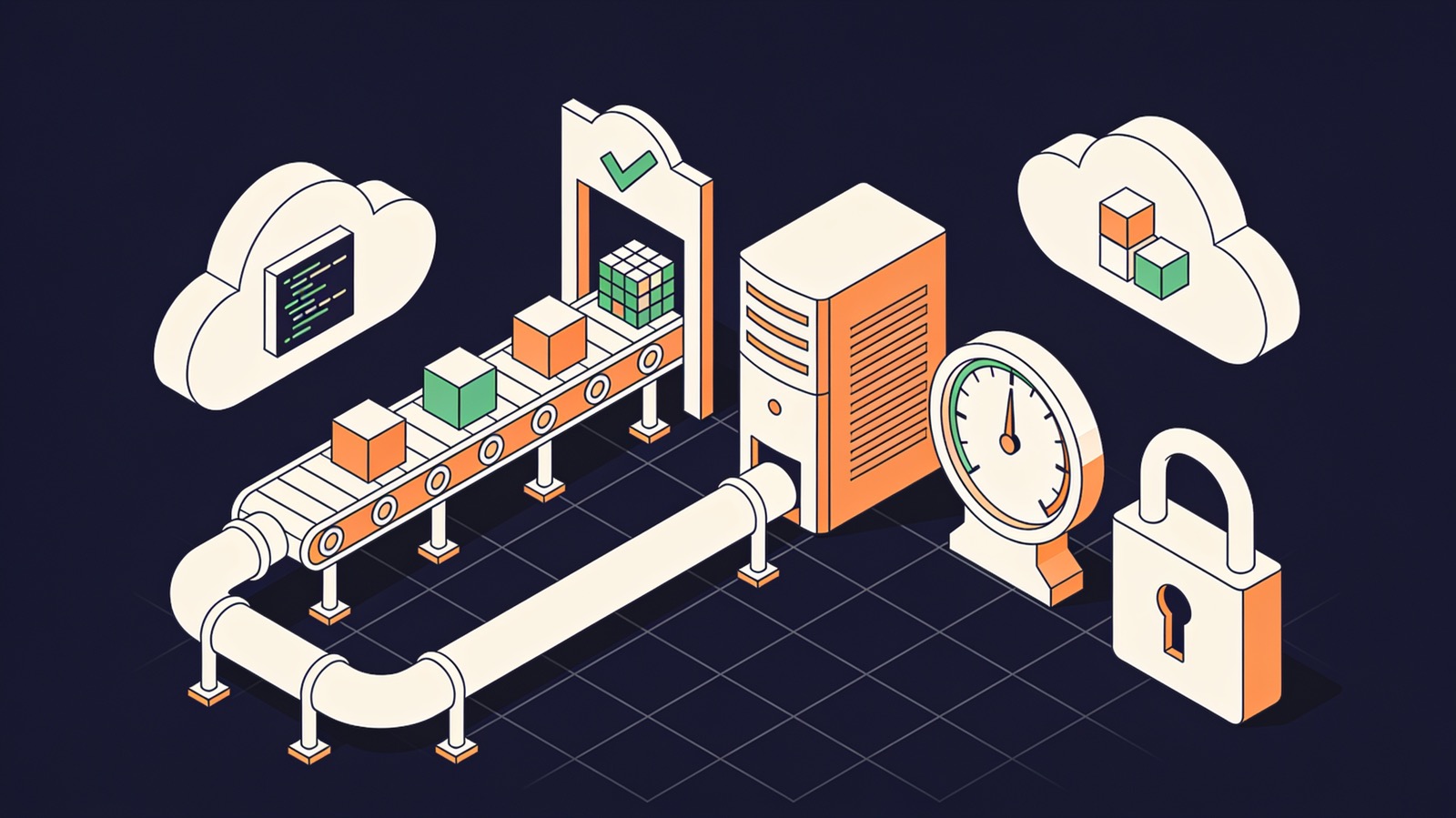
Covered by the monthly hours
The unglamorous list. Each item prevents a particular kind of bad morning.
- Security patches for the operating system and runtime
- Framework, library and plugin updates, tested on staging first
- Uptime checks from outside your network
- Alerts on disk space, memory and error rate
- Daily backups copied to a second location
- A restore test on a schedule, with the result written down
- TLS certificate and domain expiry dates tracked
- Review of failed logins and unusual admin activity
- Bug fixes, ranked with you
- Small improvements from your wish list
Failures that maintenance prevents
All of these are ordinary. None of them needs an attacker or a disaster.
The backup that never restored
The job reported success every night. The files were empty because a password changed months ago. Only a restore test reveals it.
The full disk
Logs and uploads grow quietly until the database cannot write. An alert at a sensible threshold gives days of warning.
The abandoned plugin
A component with a published vulnerability and no fix from its author. Someone has to notice and replace it.
The deprecated API
A provider announced the change a year ahead by email, to an address nobody reads. Payments stop on the cut-off date.
The update that broke checkout
Applied directly to production on a Friday. A staging copy and a short test list would have caught it.
The only person who knew
They left, and the server password went with them. Documentation and shared access are part of maintenance.
Taking over a system
Most systems reach us part-way through their life, built by someone else. The first month follows a set order.
Access and inventory
You grant access to hosting, repository and domain. We list what exists: servers, databases, scheduled jobs, third-party services.
Read before changing
The engineer reads the code and the configuration and writes a short description of how the system fits together.
Make it recoverable
Backups are confirmed and the first restore test is run. Until this passes, nothing risky is touched.
Build a staging copy
If none exists, we create one so updates can be tried safely.
Agree the priorities
You receive a ranked list: urgent security items, overdue updates, then improvements. You decide the order.
A month on retainer
Week by week
Tickets from your tracker are worked in priority order. A short summary each week lists what was done and the hours used.
Patch window
Updates are applied to staging, checked against a test list, then released to production at a time you have approved.
Restore test
A backup is restored to a scratch environment and the application is opened to confirm the data is readable.
Monthly report
Uptime, incidents, updates applied, hours by category, and anything approaching end of support.
Terms and limits
Is there someone on call at night?
No. Support is given during India working hours plus the overlap agreed with you. We do not offer round-the-clock on-call cover and will not pretend otherwise. Monitoring alerts can be sent to your own staff as well.
How fast do you respond?
We reply to messages within one business day. How quickly a fix follows depends on the fault, so we do not publish a repair time.
What happens to hours we do not use?
The treatment of unused hours is written in your agreement. Ask us before signing if this matters to your budget.
Can you maintain something you did not build?
Yes. Expect the first weeks to be spent on reading, documentation and backups, not on new features.
Do you host the system for us?
No. It stays in your hosting account, or we help you open one in your name. We work in it as invited users.
Which technologies do you look after?
PHP and Laravel, WordPress, Node.js, Python, .NET, React and Vue front ends, MySQL and PostgreSQL, on Linux servers or the main cloud platforms.
Is a retainer the right arrangement?
A retainer fits when
- The system earns money or runs operations every day.
- There is a steady trickle of fixes and small requests.
- You want the same engineer each month, not a ticket queue.
- You have no in-house developer, or yours is fully booked on new work.
Choose differently when
- You need a single fix. Ask for a quote for that job alone.
- You require staffed cover at all hours. A managed-service provider with shifts is the right supplier.
- The work is a large new feature. That is a project with its own discovery.
- The system is about to be replaced within a few months.
Retainer cost by role
Our rates are published. Pick the role and move the sliders for an indicative budget.
Rate card
| Role | Hourly | Monthly* |
|---|---|---|
| Frontend / WordPress | AED 110 | AED 17,600 |
| Backend / API | AED 118 | AED 18,880 |
| Full-stack | AED 129 | AED 20,640 |
| Mobile (React Native / Flutter) | AED 129 | AED 20,640 |
| DevOps / Cloud | AED 147 | AED 23,520 |
| AI / Automation engineer | AED 165 | AED 26,400 |
| QA / Test engineer | AED 92 | AED 14,720 |
| UI / UX design | AED 103 | AED 16,480 |
*160 hrs/month full-time. Rates are indicative for planning, in UAE dirhams (converted from our US-dollar rates at the fixed peg of 3.6725), before VAT where applicable, and depend on seniority, contract length and timezone overlap. Longer engagements and multi-role teams are discounted — ask.
Tell us what needs looking after
Name the system, the technology if you know it, and who maintains it today. A reply follows within one business day.