
Cloud for Software Teams
Your developers are good at the product. Less of their attention goes to the machinery around it: the pipeline that takes twenty minutes, the staging server that drifted away from production, the deployment only one colleague dares to run.
This service is platform work for engineering teams. A DevOps engineer joins you, part-time or full-time, and builds the path from a merged pull request to a running, observable release.
If you run business systems and do not write code yourselves, our general cloud services page describes migration and cost reviews and will suit you better.
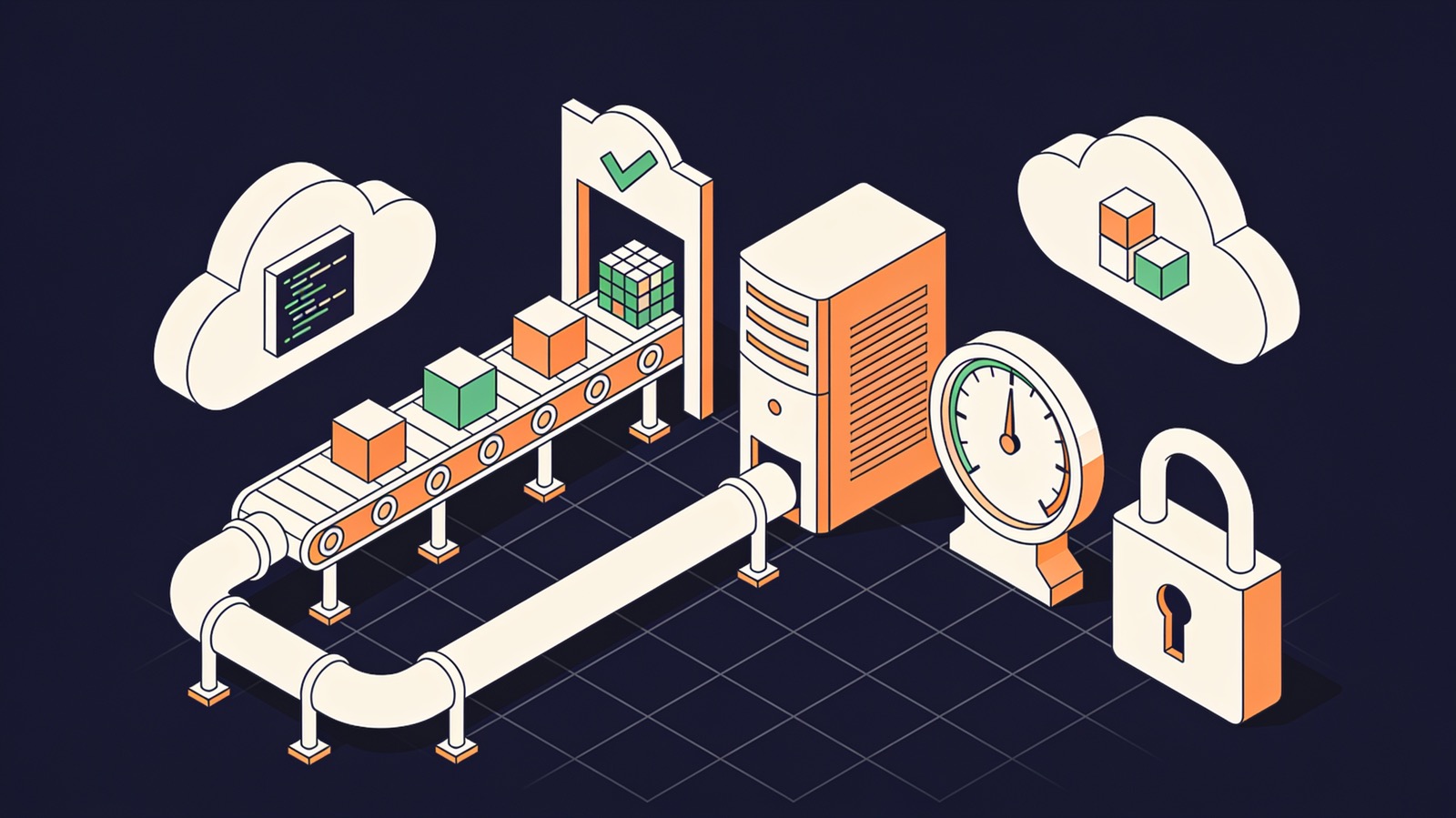
The platform work we take off your developers
Continuous integration and delivery
Build, lint, test and package on every push. Dependency caching and parallel test jobs to shorten the wait. Deployment by merge, with a manual approval gate for production if you want one.
Environments
Development, staging and production created from the same infrastructure code, so they differ only in size and secrets. Short-lived preview environments per pull request where the architecture allows.
Containers
Small, reproducible images with pinned base versions and a non-root user. Run on a managed container service, or on Kubernetes when the number of services justifies its overhead.
Observability
Structured logs, metrics and traces tied together by a request ID. Dashboards for the few signals that matter and alerts that fire on symptoms users would feel.
Tools we are at home with
We fit into the toolchain you have. Replacing a working tool is rarely the best use of your budget.
- Pipelines
- GitHub ActionsGitLab CIBitbucket PipelinesJenkins
- Infrastructure code
- TerraformOpenTofuAnsiblePulumi
- Containers
- DockerKubernetesHelmAmazon ECSCloud Run
- Observability
- OpenTelemetryPrometheusGrafanaSentry
- Secrets
- AWS Secrets ManagerAzure Key VaultHashiCorp Vault
Problems teams bring to us
It works on my machine
Local set-up takes a new joiner two days and differs from production. A container-based development environment fixes both.
Slow pipelines
Every push reinstalls all dependencies and runs the whole suite in sequence. Developers stop waiting and merge on hope.
Flaky tests
Tests that fail at random teach the team to press Retry. We find the shared state or timing assumption behind them.
Deployments need a hero
Steps live in one head or one shell history. We turn them into a script the pipeline runs the same way each time.
Secrets in the repository
API keys committed long ago and copied into chat. They are rotated, moved to a secrets store and scanned for on each commit.
Blind in production
Users report errors before the team sees them. Error tracking and a latency alert reverse that order.
A release path we would call finished
- A fresh clone builds with one documented command
- Tests run on every pull request and block a failing merge
- The same image moves unchanged from staging to production
- Database migrations run as a pipeline step
- Roll back is a single action and has been tried
- Zero-downtime deployment by rolling or blue-green release
- Secrets injected at run time, never baked into images
- Image and dependency scanning in the pipeline
- Logs searchable by request ID
- Alerts routed to an on-call rota owned by your team
How the engagement runs
You outline the pain
Tell us the stack, the hosting and what slows releases today.
Meet the engineer
We put forward one named person. Your lead interviews them as they would any hire.
First task
Something small and visible, such as halving the pipeline time or containerising one service.
Backlog in your tracker
Platform tasks sit beside product tasks. Changes arrive as pull requests your developers review.
Weekly summary, monthly invoice
Hours and outcomes are reported each week. The arrangement renews month by month.
Do you need a DevOps engineer yet?
Probably yes when
- Releases happen less often than the team would like because they are painful.
- Senior developers lose hours each week to servers and pipelines.
- You are about to split a monolith or add a second product.
- A customer questionnaire asks how you deploy, monitor and restore.
Probably not when
- A platform-as-a-service already deploys your one application without trouble.
- The team is two people and the product is pre-launch. Keep it simple.
- You want Kubernetes because others have it, not because of a problem it solves.
- Nobody on your side will review or own the platform code afterwards.
From engineering leads
Do we need Kubernetes?
Often not. A managed container service or a few virtual machines behind a load balancer serves many products well. We recommend Kubernetes when you run many services and have people to operate it.
Will your engineer have production access?
Only what you grant, through your identity provider, with multi-factor sign-in. Many teams give pipeline-only deployment rights and read access to logs.
Who is on call?
Your team. We build the alerts and runbooks and can help investigate during agreed hours. We do not provide out-of-hours on-call cover.
Can you work with our monorepo?
Yes. Path-based triggers and build caching keep pipelines from rebuilding everything on each change.
What do we keep if we stop?
Pipelines, infrastructure code, dashboards and runbooks are all in your repository and accounts. Nothing depends on our systems.
Tell us your stack and your slowest step
Language, hosting, pipeline tool and the part of releasing that costs the most time. Our answer arrives within one business day.